
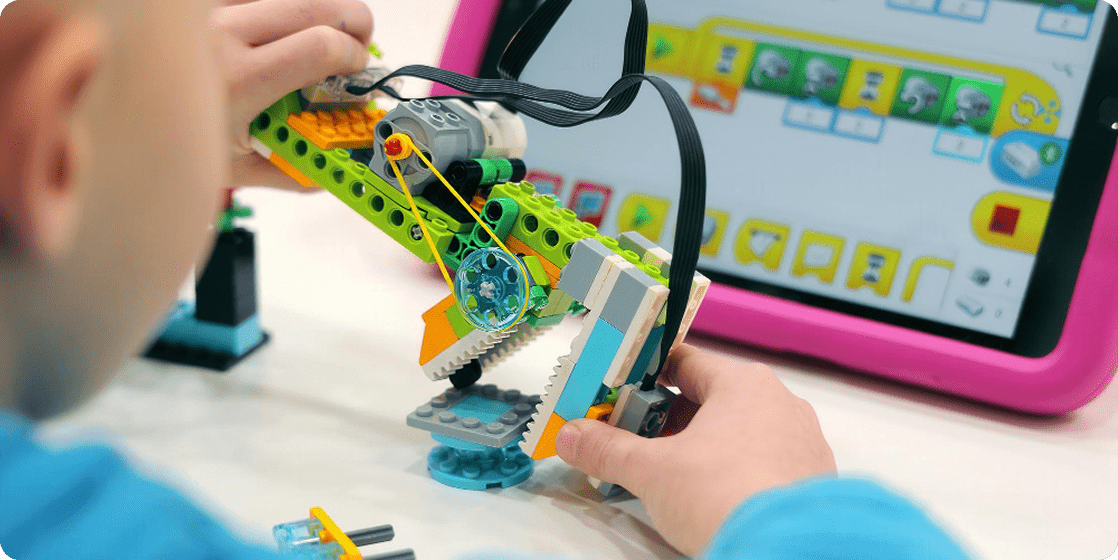
Snapping jawsA model with gears and moving parts
CoursesLEGO® Little Engineers
LEGO® Little Engineers · ages 4-6In Little Engineers, your child builds with LEGO® bricks, from simple models made from a picture to machines with wheels and levers that really move. Everything is a game, and along the way they train fine motor skills, focus and patience.
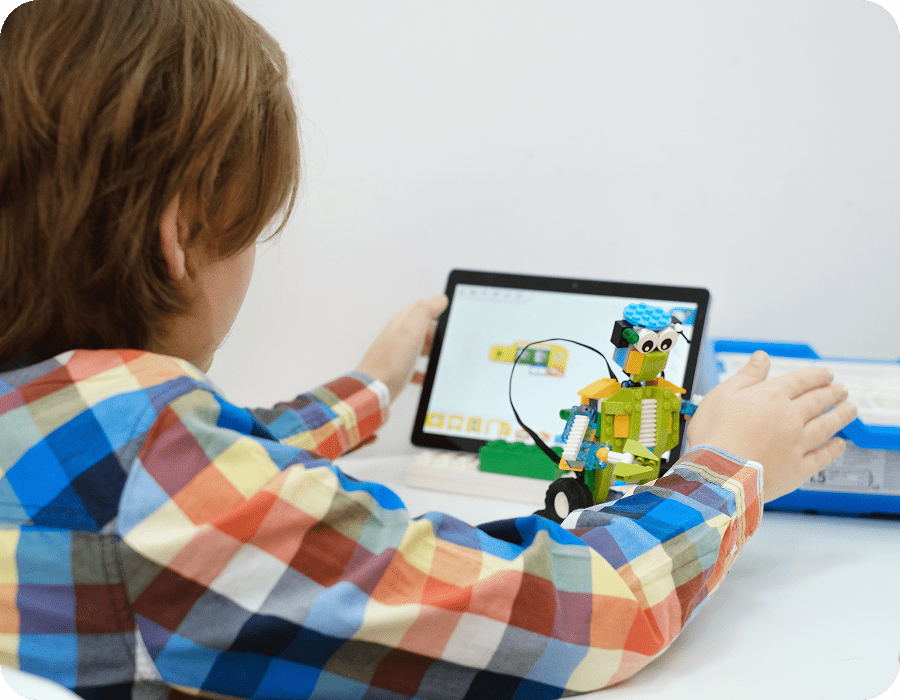
Children come up with their own ideas and turn them into models. Every finished build is something they made themselves, which sparks creativity and builds self-confidence.
Building with small and moving parts trains the fingers and hand-eye coordination. It is good practice for holding a pencil and gets the hand ready for writing.
Putting a model together step by step from a picture takes attention, memory and patience. Children learn to follow the steps and keep going until it works.
In a group of 6-8 children, the teacher can help every child and nobody is left waiting. Everything happens as a game, with LEGO® bricks in their hands instead of a phone.
Children start by building simple models from a picture. They learn to recognise shapes and colours, find the right piece and follow the steps one at a time - the habits every later build depends on.
Soft skills: Children develop fine motor skills, attention and patience as each model comes together piece by piece.
Now children start to invent and build on their own. They discover what makes a model move, what holds it up and how to connect the pieces so that it works.
Soft skills: Children learn to think logically, test an idea and try again when a model does not move the first time.
Children invent constructions of their own - a house, a bridge, a car - and start building together. They share the pieces, explain what they are making and work out ideas as a group. The course ends with a build of their own: each child creates a first project, presents it to the class and takes home a photo and a video of it.
Soft skills: Children practise sharing, listening and explaining their ideas. Presenting their own project helps them speak up with confidence in front of a group.
A look at the kind of models children build in class, from moving machines to robots on wheels.
Snapping jawsA model with gears and moving parts

A vehicle on tracksBuilt first, then driven from a tablet
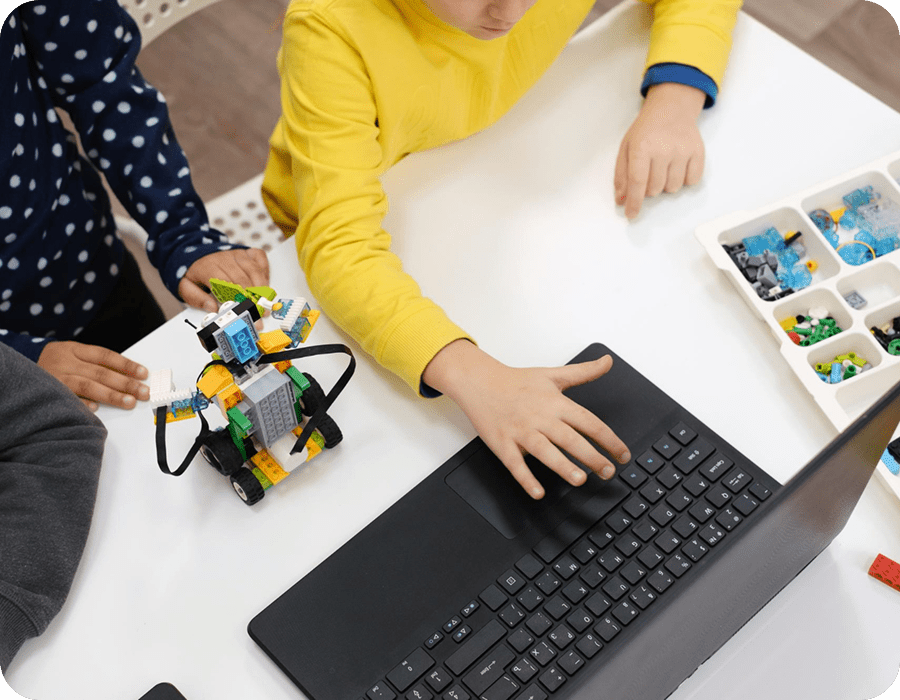
A robot on wheelsBuilt together at one table

Wheels and axlesBuilding a model step by step
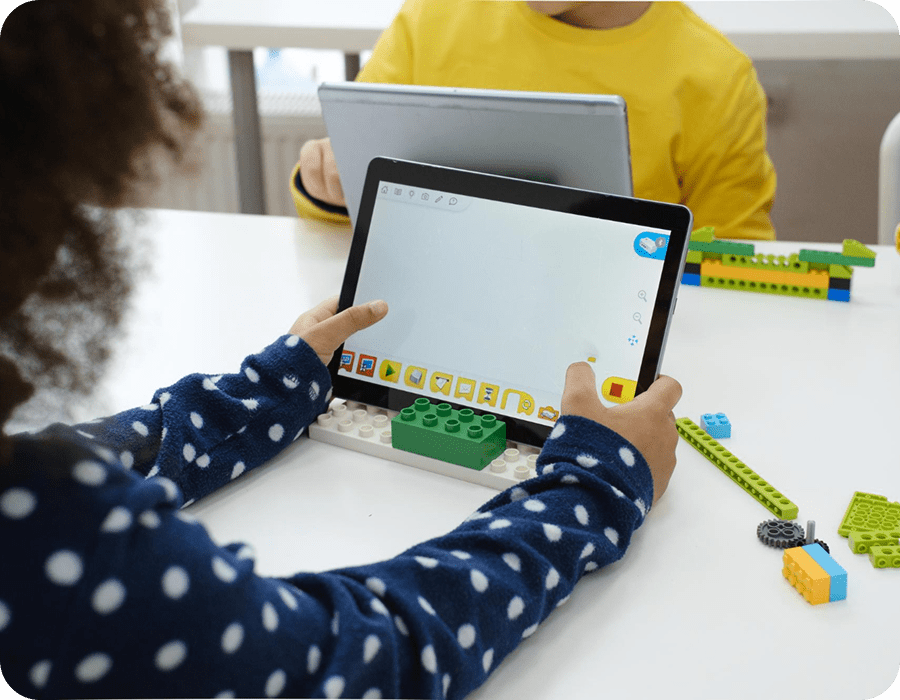
Making it workTesting a finished build
When lessons run
Saturdays
11:00-13:00
Each module includes 12 weekly lessons over three months. Most children start at the beginning, but it may also be possible to join a module that has already started. Contact us and we will find the best option for your child.
Good to know
Choose the package that works best for your family. The more lessons you book, the lower the price per lesson.
How would you like to pay?
By continuing to payment you accept our Terms and Conditions.
Lessons run once a week, so a month is about four lessons. The standard rate is 160 EUR a month - 480 EUR for three months, 1 440 EUR for the whole 9-month course. Paying in full instead takes 5% off three months and 10% off the whole course.
The questions parents ask us most often.
Impact Academies Amsterdam offers technology courses for children and teenagers aged 4-17. The programme is divided into age-appropriate levels, from LEGO® Little Engineers for the youngest children to IT-Expert for teenagers.
We recommend a course based on your child’s age, experience and interests. Whether they enjoy games, robotics, design, artificial intelligence or programming, we will help you find the most suitable group.
No. Beginners are welcome. Children with previous experience can join a more advanced group after we assess their current knowledge and interests.
Depending on their age and course, students explore coding, robotics, game development, artificial intelligence, web development, graphic design, 3D modelling and digital literacy. They also develop communication, teamwork, creativity and presentation skills.
Our lessons are practical and project-based. Children learn by creating their own games, animations, websites, applications, robots and digital projects, not simply by listening to theory.
Classes are taught in both Dutch and English. English is especially important in technology, so children naturally develop their language skills while learning IT. At the same time, every child can ask questions and receive support in whichever language feels most comfortable.
Classes take place once a week, and each lesson lasts two hours. The exact day and time depend on the group you choose.
We work with small groups of usually 6-8 children, allowing each child to receive support and personal attention. A group may occasionally have up to 15 children.
All equipment needed for the chosen course is included in the price, including laptops, tablets, robots and LEGO®.
We are very aware of children’s screen time, and this is exactly why we created these courses: to help children learn how to build with technology, not just consume it. Lessons combine focused computer work with teamwork, creative exercises, presentations, energising activities and other screen-free moments.
Yes, we offer free demo lessons so your child can meet the teacher and future classmates, explore what we do, and see how they can create their own project using technology.
Yes, joining after a course has started is possible. Contact us so we can evaluate the options and find the most suitable group for your child.
Parents and children have access to their own online account. Children can view study materials and homework and track their projects, while parents can follow their child’s progress.
Please let us know as early as possible. We will always try to find a suitable catch-up solution, depending on the course and available space, but a replacement lesson cannot always be guaranteed.
Please contact us before registration and tell us about any learning, health or accessibility needs that may affect participation. We will discuss what support may reasonably be provided and whether the selected group is suitable.
Leave your details and we will get back to you by phone, WhatsApp or email to answer your questions and help you choose. We can also book a trial lesson for your child.
We use your details only to answer your questions. Privacy policy.